Free Marriage Biodata Maker For All Formats
Create beautiful bio data for marriage in Marathi, Hindi, English, Gujarati, Telugu, Bengali and more within minutes. Free biodata maker available in PDF and Word formats.
191,800+ Biodatas Created 100% Free Basic Templates

Create Marriage Biodata
Fill in your details, upload your photo, choose a template and download a print-ready PDF or Word file in under 5 minutes.
Choose your language
Biodata Title
God Name
Choose your photo
Upload your profile photo, biodata with photos get more attention.
Photo Tips
- • Use a clear, recent photo with good lighting
- • Face should be clearly visible and centered
- • Avoid group photos or heavily filtered images
- • Professional or formal attire recommended
- • Image will be cropped to 4:5 ratio automatically
What Our Users Say
Thousands of happy users have created their perfect marriage biodata with us.
"I created my marriage biodata in Hindi within minutes. The templates were beautiful and professional."
Rahul Patel
Delhi
"The Marathi biodata templates were exactly what I needed. My parents were very impressed with the professional look."
Anjali Joshi
Mumbai
"As a Muslim, I found the culturally appropriate templates very helpful. The ease of adding details in English made this the perfect tool."
Faisal Khan
Hyderabad
Create Biodata in Your Language
Choose your language and create a beautiful marriage biodata in minutes.
Why Choose Our Biodata Maker?
Our biodata maker is designed to make the process of creating a professional and attractive marriage biodata as simple as possible.
Marathi, Hindi, English, Gujarati, Telugu, Bengali and more.
Professionally designed templates that make your biodata stand out.
Download your biodata in PDF, Word, or image. Share digitally or print.
Templates for Hindu, Muslim, Christian, Sikh, Buddhist, and Jain communities.
Your personal information is secure. We don't store your data unnecessarily.
Simple editor to add, edit or remove sections. Create a truly personalized profile.
How to Create Your Marriage Biodata
Creating your perfect marriage biodata is simple with our easy-to-use platform. Follow these steps:
Choose a Template
Select from our variety of culturally appropriate and professionally designed templates.
Fill Your Details
Enter your personal information, family details, education, and preferences in our simple form.
Download & Share
Preview, download, and share your biodata in PDF, Word, or image format.
Choose Your Perfect Template
Select from our collection of professionally designed biodata templates. Each template is fully customizable.
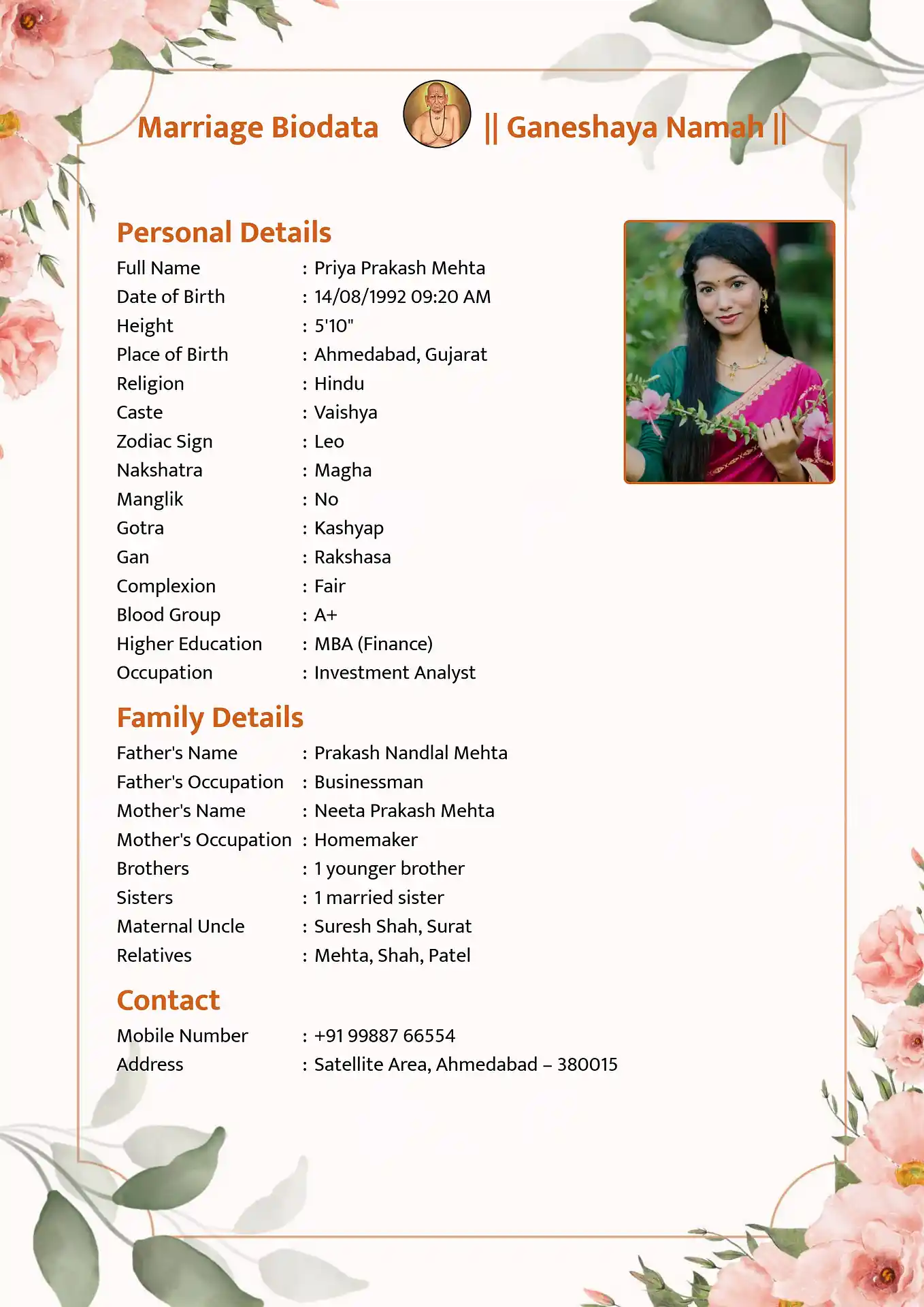
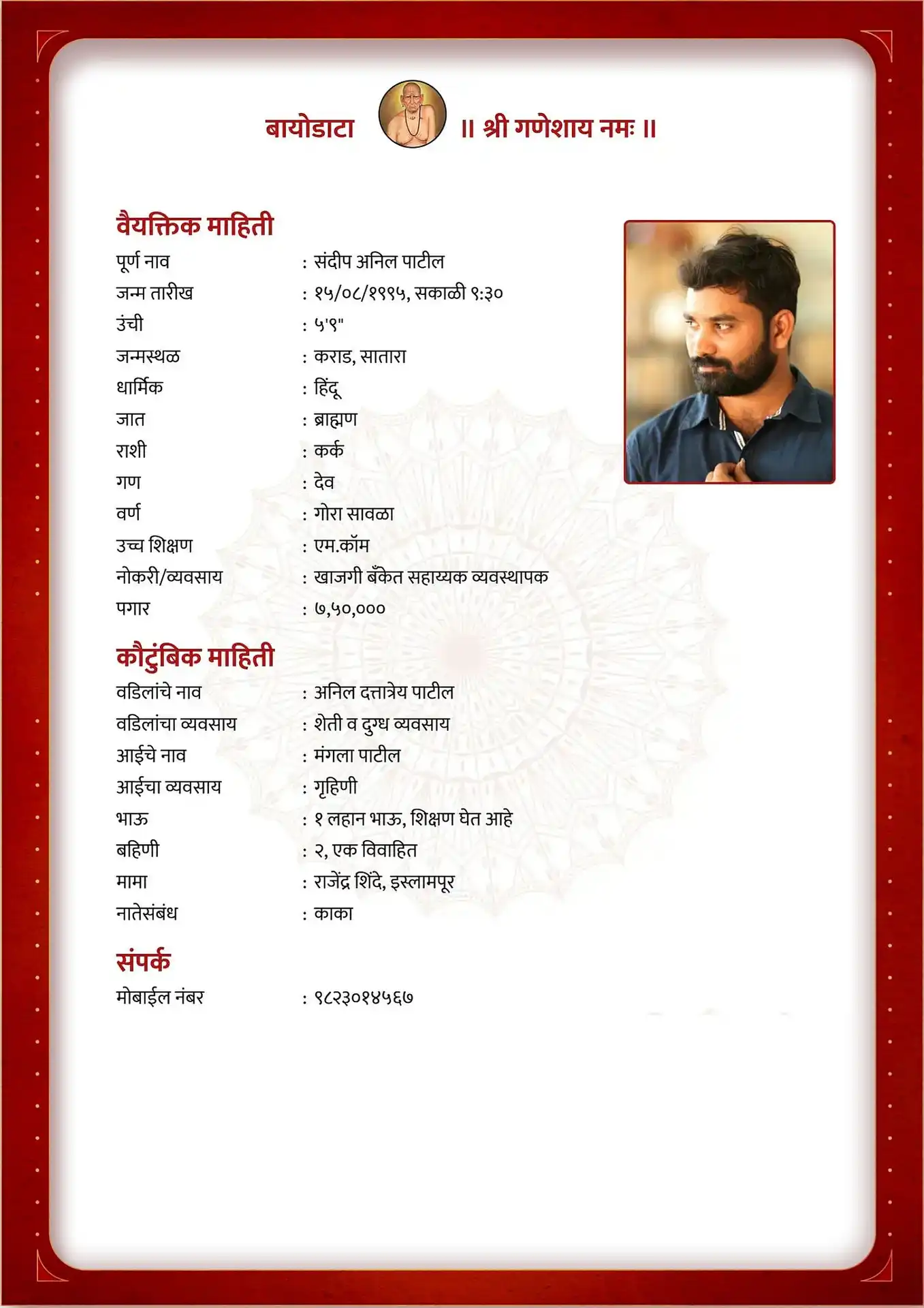
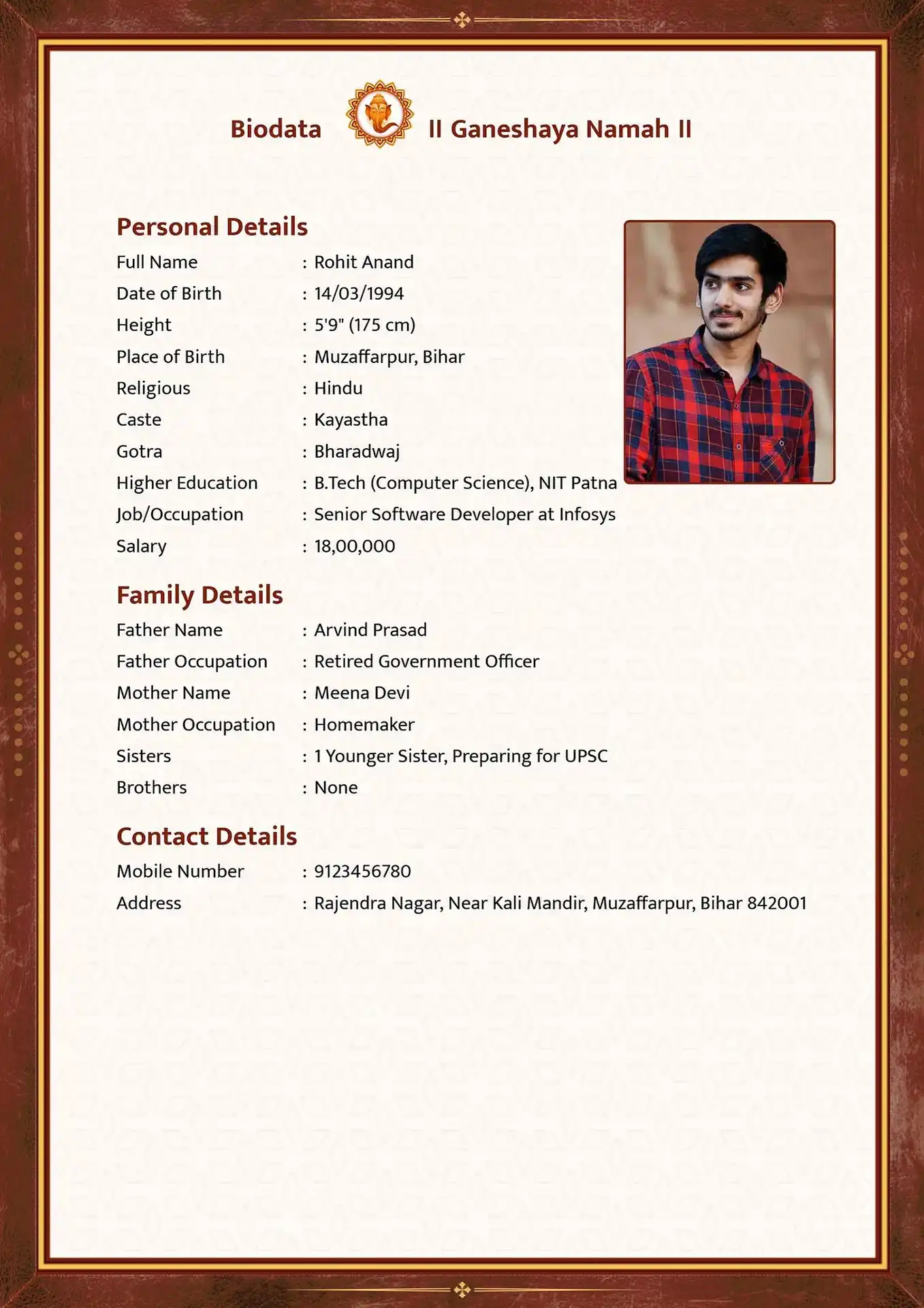
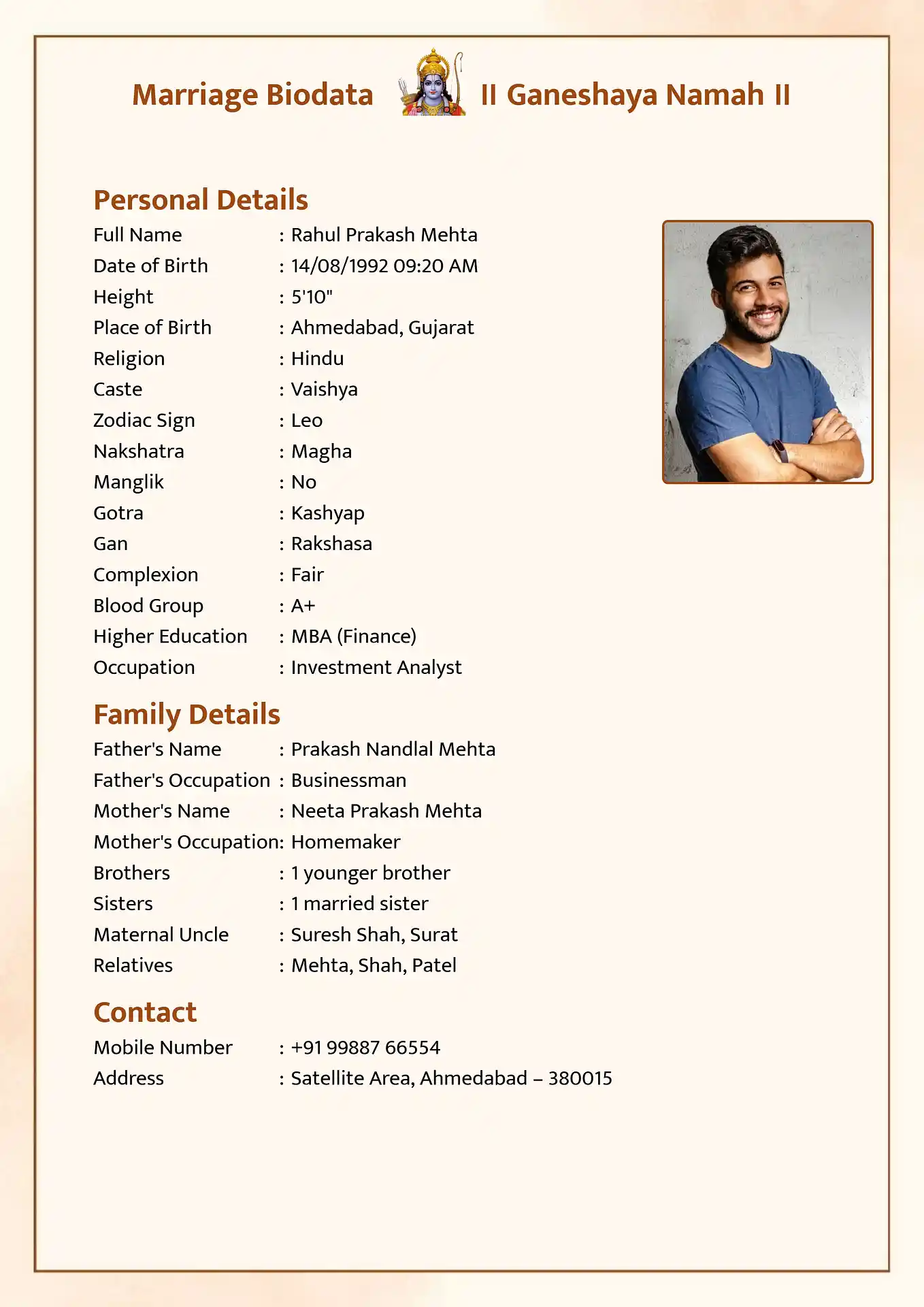
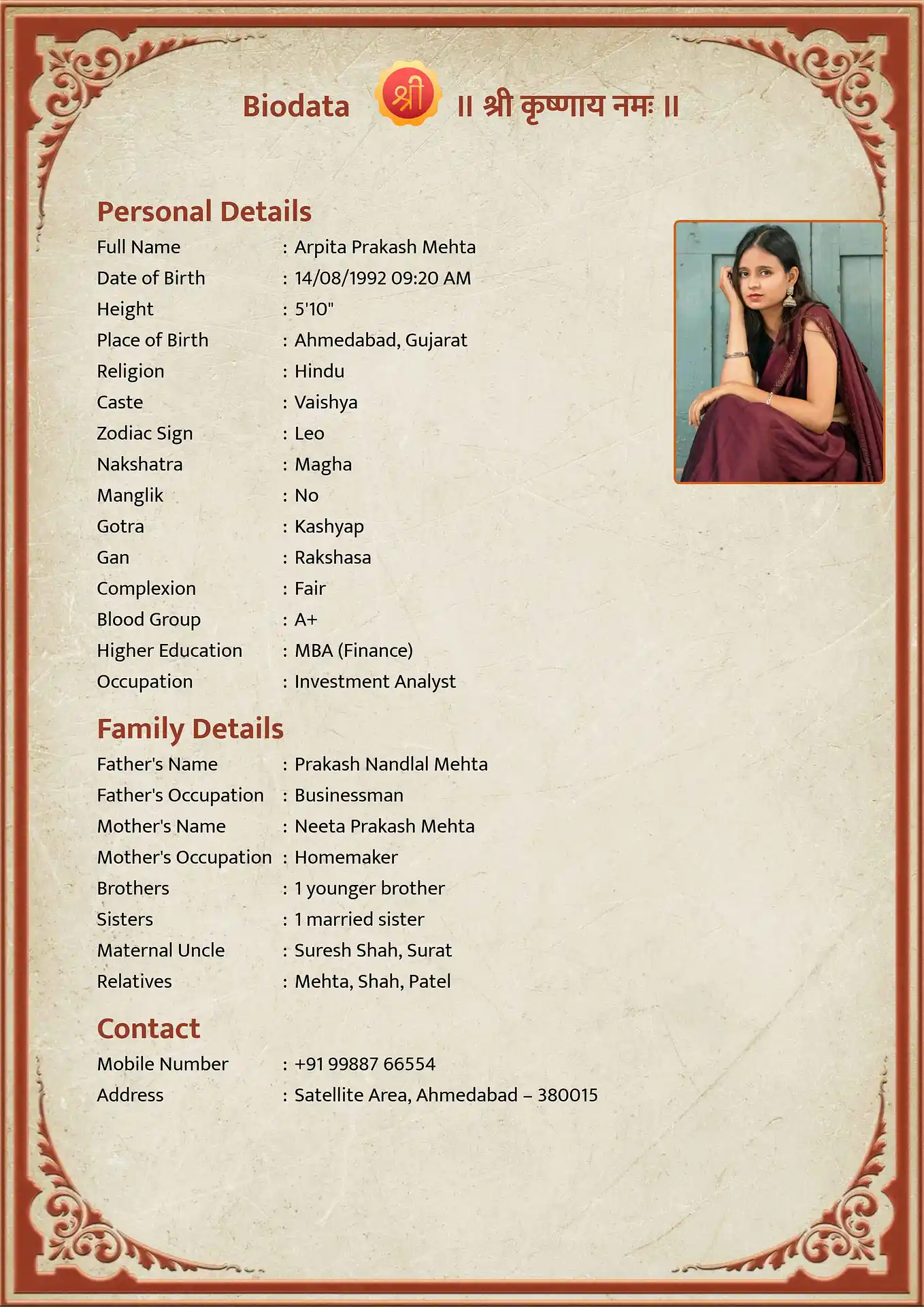
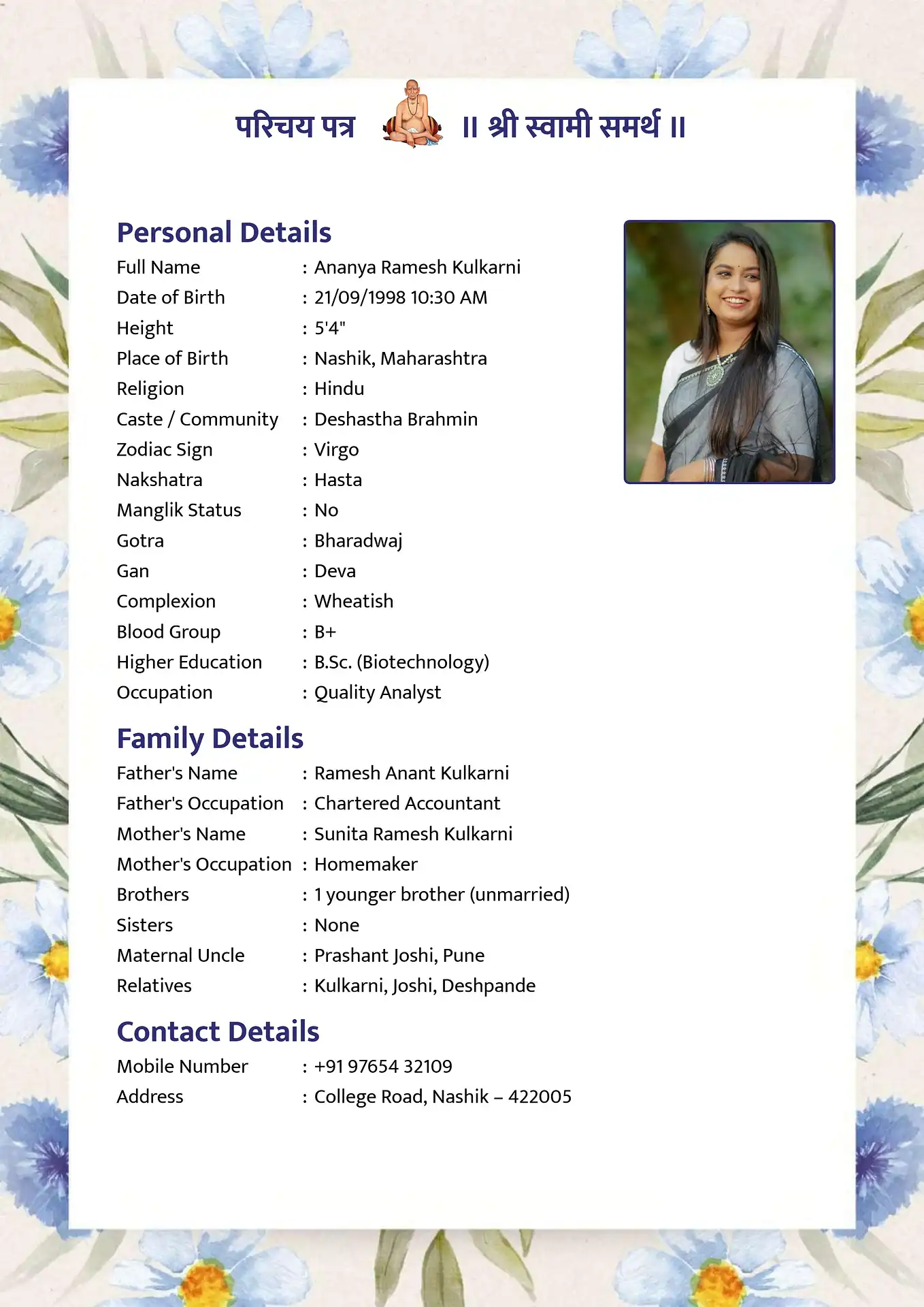
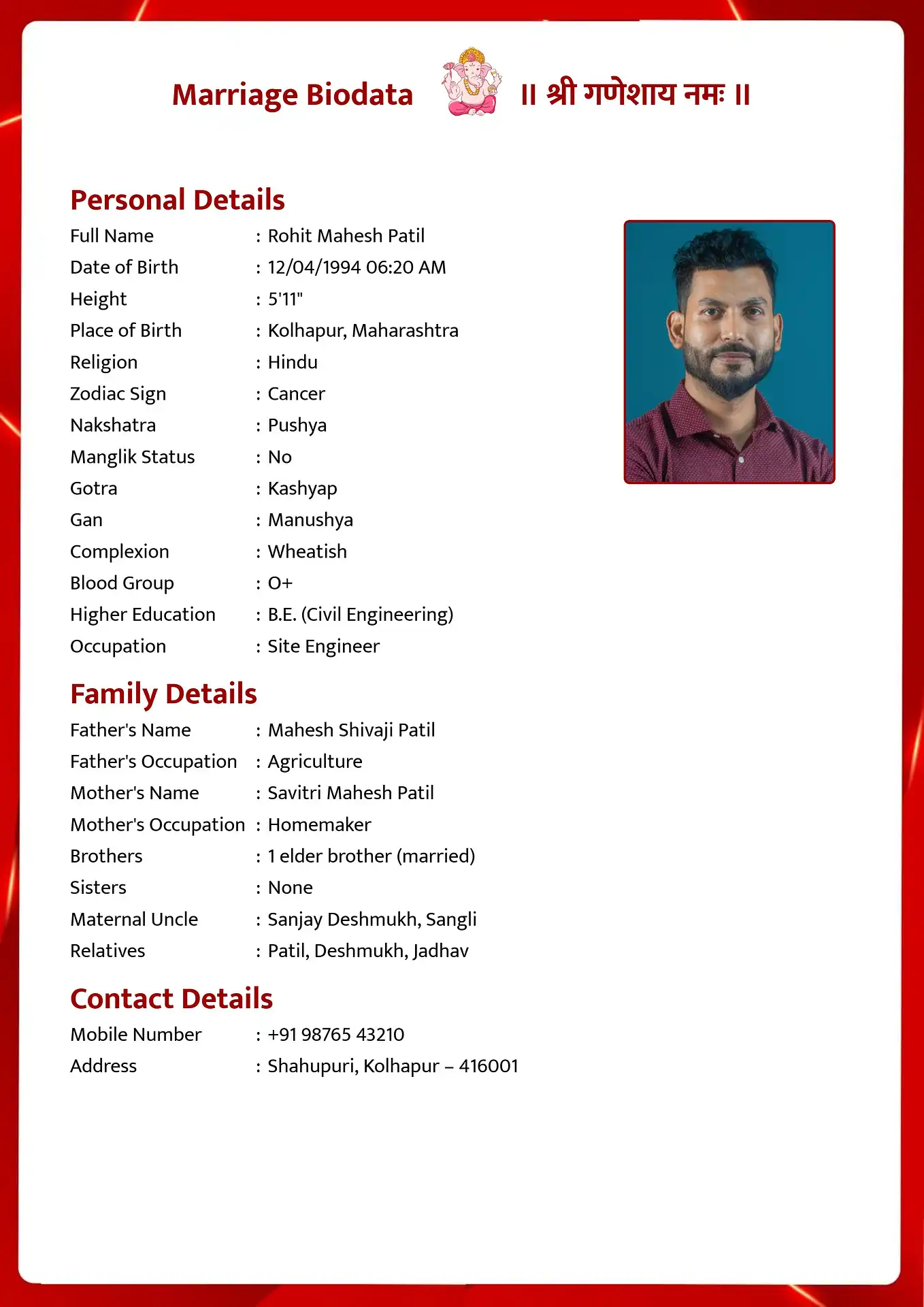
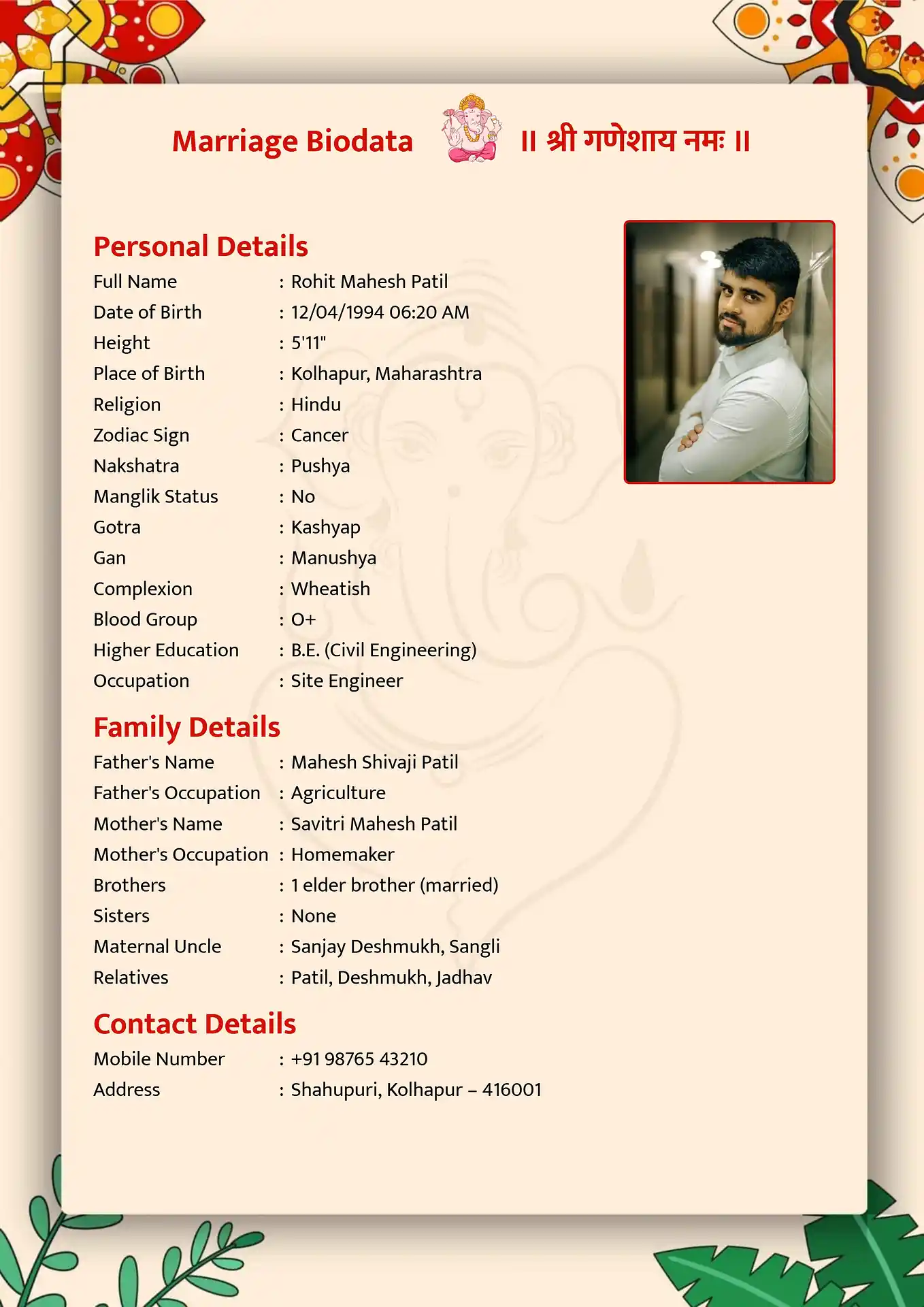
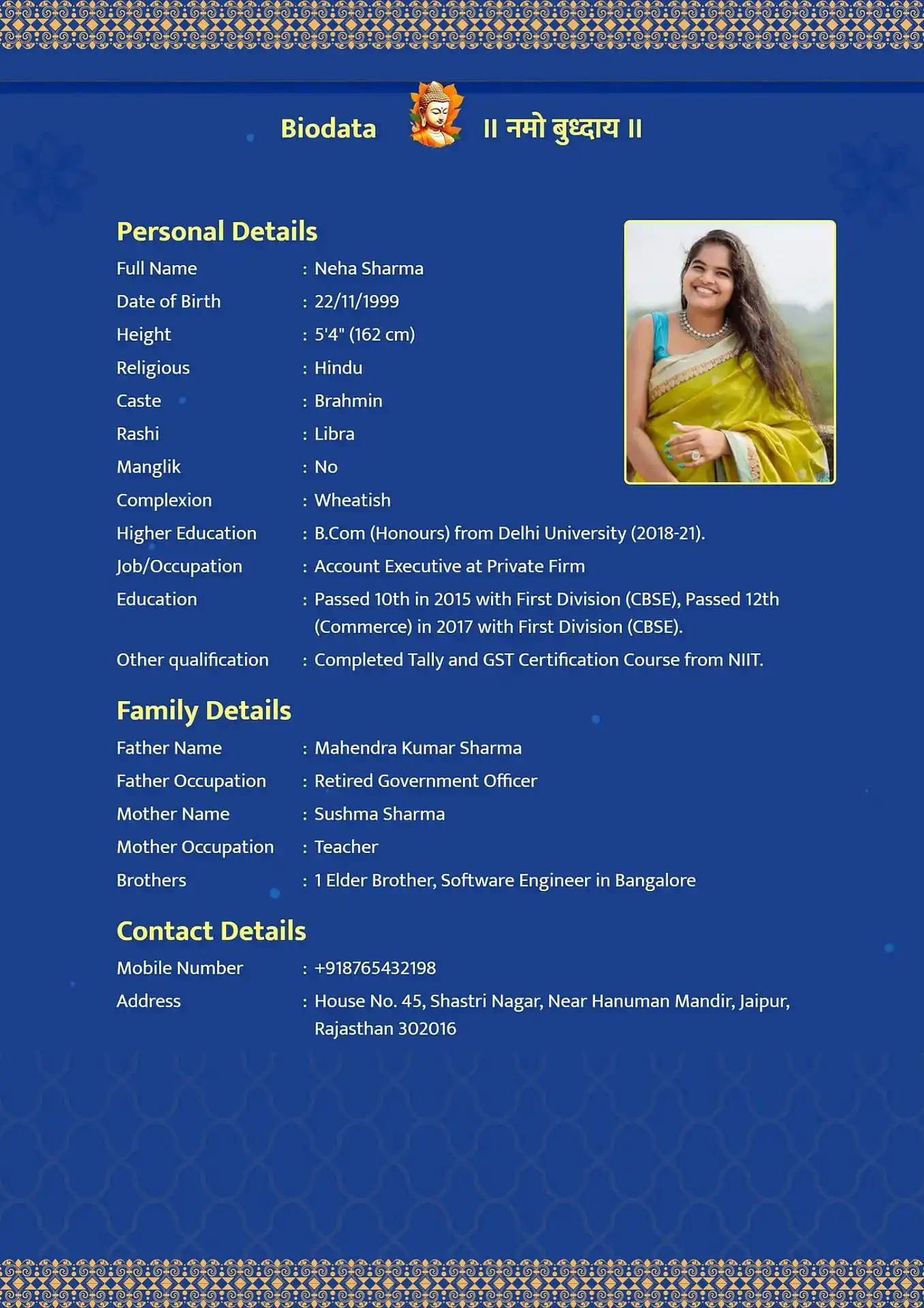
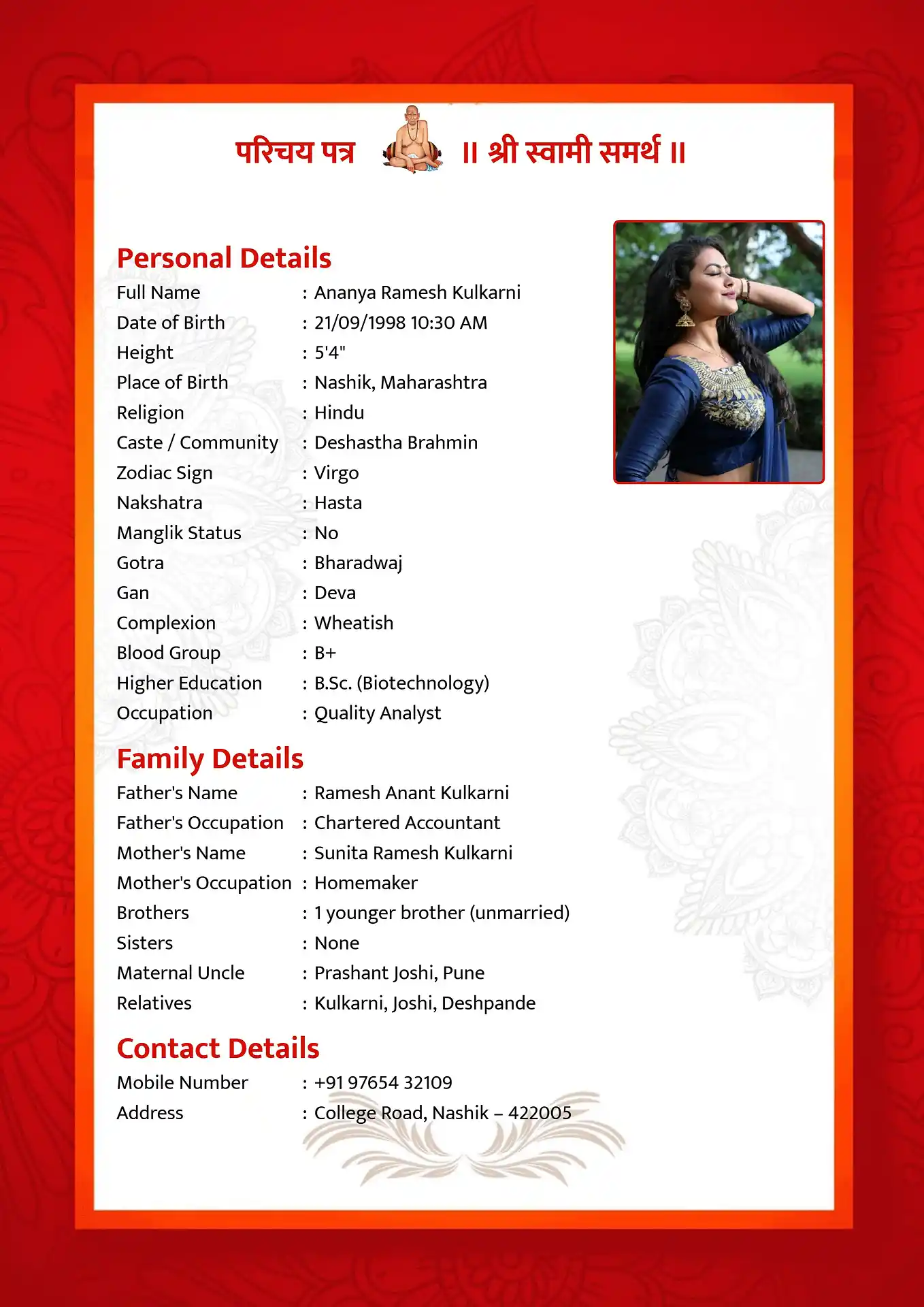
Biodata For All Communities
We offer specialized biodata formats that respect cultural traditions and preferences for various communities.
Hindu
Includes gotra, rashi, nakshatra and manglik fields alongside personal and family details.
Muslim
Covers family background, sect and religious details alongside education and profession.
Christian
Straightforward personal, family and career sections without astrology fields.
Sikh
Includes family gotra and background details alongside personal and career information.
Buddhist
Clean personal and family sections suited to Buddhist community conventions.
Jain
Includes gotra and family background fields alongside personal and career details.
What to Include in Your Marriage Biodata
Not sure what some of these fields mean? Here's a quick guide to the personal and cultural details commonly included in a marriage biodata.
Rashi (Moon Sign)
Your Vedic astrology moon sign, used by many families for horoscope matching. For example: Simha (Leo). Leave this blank if your family doesn't follow astrology.
Nakshatra
One of the 27 lunar constellations in Vedic astrology, often used alongside Rashi for compatibility matching. For example: Rohini.
Gotra
Your family's ancestral lineage, common in Hindu, Sikh and Jain biodata. Some families check that both sides have different gotras before proceeding. For example: Kashyap.
Manglik Status
Whether Mars (Mangal) is placed in a specific position in your birth chart. Many families match Manglik status between prospective partners. Options: Yes, No, or Anshik (partial).
Complexion
A physical detail some biodata formats include, ranging from very fair to dark. It's entirely optional to add.
Family Details
Parents' names and occupations, and the number of married and unmarried siblings. Helps the other family understand your background and support system.
Biodata Tips & Guides
Practical advice for creating a marriage biodata that makes a great first impression.
The Best Muslim Biodata Makers: Tools to Create Your Perfect Profile
Looking to find the best Muslim biodata makers available online? Here's a roundup of the top tools to help you create a stunning and professional Muslim biodata for your future marriages.
Read More →Marriage Biodata Format: Tips, Tricks, and Templates
Looking to find the best marriage biodata format available online? Here's a roundup of the top tools to help you create a stunning and professional marriage biodata for your future marriages.
Read More →How to Create Perfect Marriage Biodata Photo Poses for Boys
It is essential to choose the right poses that showcase your best features and create a positive impression.
Read More →Frequently Asked Questions
Get answers to common questions about creating your marriage biodata.
What is a marriage biodata?
Is your biodata maker really free?
What formats can I download my biodata in?
What languages do you support?
Is my personal information secure?
Can I edit my biodata after creating it?
Do I need to fill in Rashi, Nakshatra or Gotra if I don't know them?
Do you have biodata formats for different communities?
Can I create a biodata without a photo?
Do I need to sign up or register to use this?
Can I share my biodata on WhatsApp?
What's the difference between a marriage biodata and a job biodata?
How many templates can I choose from?
Create Your Perfect Marriage Biodata Today
Join over 191,800 satisfied users who created their marriage biodata with us.